










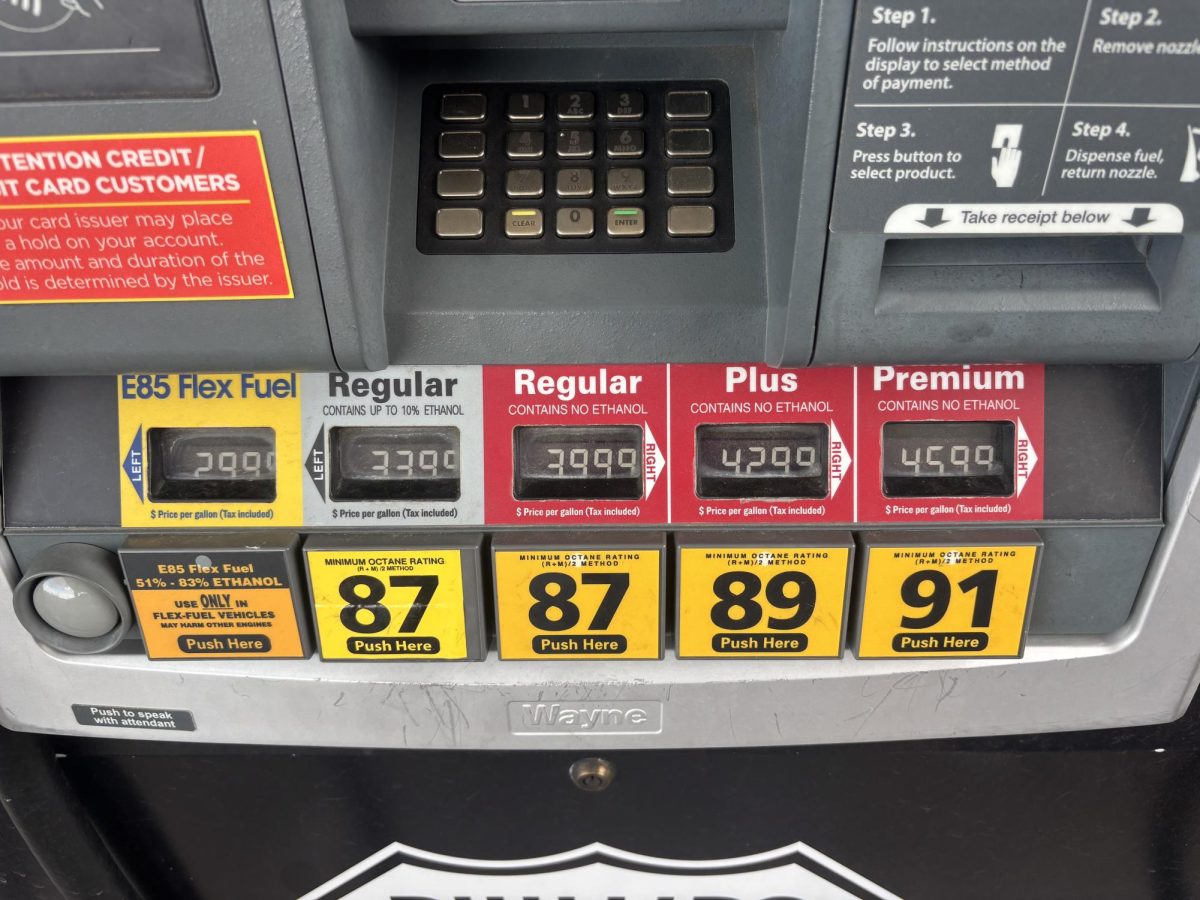
U.S. markets are experiencing the largest oil supply disruption in history. In the wake of the U.S. & Israel’s joint attack on Iran and its targets in the Gulf, the Islamic Revolutionary Guard Corps (IRGC) retaliated by closing the Strait of Hormuz. CNBC is reporting that 20% of the global supply of oil has now been disrupted, causing oil prices to shoot to over $100/barrel.
The International Energy Agency reports that the Strait of Hormuz is single-handedly responsible for 25% of maritime crude trading, and its closure means fewer barrels of oil are hitting U.S. markets, causing consumer gas prices to rise simultaneously. Nationally, gas prices have risen an average of 30% since the launch of the attack in late February. This is the largest spike since Russia’s invasion of Ukraine shocked markets in 2022.
Vice President J.D. Vance responded to the rise in prices, saying there’s a “rough road ahead.” But for students and faculty trying to make ends meet, the $4/gallon price tag can be a tough pill to swallow.
“I used to pay around $35 for a tank of gas, and I got gas yesterday, and it cost $60 for a whole tank,” junior Cami Spalveri said. “I really have to reduce my spending. I can’t go out to eat as often as I want to because I pay for my own gas, and I drive a lot, I would say. I’ve had to reduce going to Target and just buying makeup because I want to. I’ve just been sticking mainly to buying only things that I need so that I can save money for my gas.”
The noticeable change in prices has been felt by drivers across the student body.
“It is minimum $10 more to fill up my tank recently,” junior Cassie Bannister said. “And I feel like my gas just isn’t lasting as long, and I drive a lot, so it really makes me upset going to get gas.”
Beyond students, faculty and staff have to balance the rising prices with other expenses in their lives.
“The last time I went to fill up my car, I noticed that the ending amount was at least $10, maybe more like $15, more than it had been the time before,” Speech and Debate Coach Lori Crews said. “It was high enough that it really caught my attention and caused concern for me as a single person with just one household income. If the gas prices continue to rise, it is going to cause problems with my monthly budget.”
To address the rising costs of gas, people have to move dollars from other parts of their lives into their transportation budgets to ensure they can get from point A to point B.
“I have had to consider whether I will take money away from my food budget for the month so that I have the money that I need for the increased gas prices because I have to be able to fill up my tank and make it back and forth to work every day,” Crews said. “I commute from Moore to Bishop McGuinness every day, which does entail also sitting in rush hour traffic, and that uses up more gas than just driving.”


Cassie Bannister | Apr 16, 2026 at 1:43 pm
Incredible words from the best writer in the newsroom. 10/10, no notes – frankly deserving of a Pulitzer. -CB